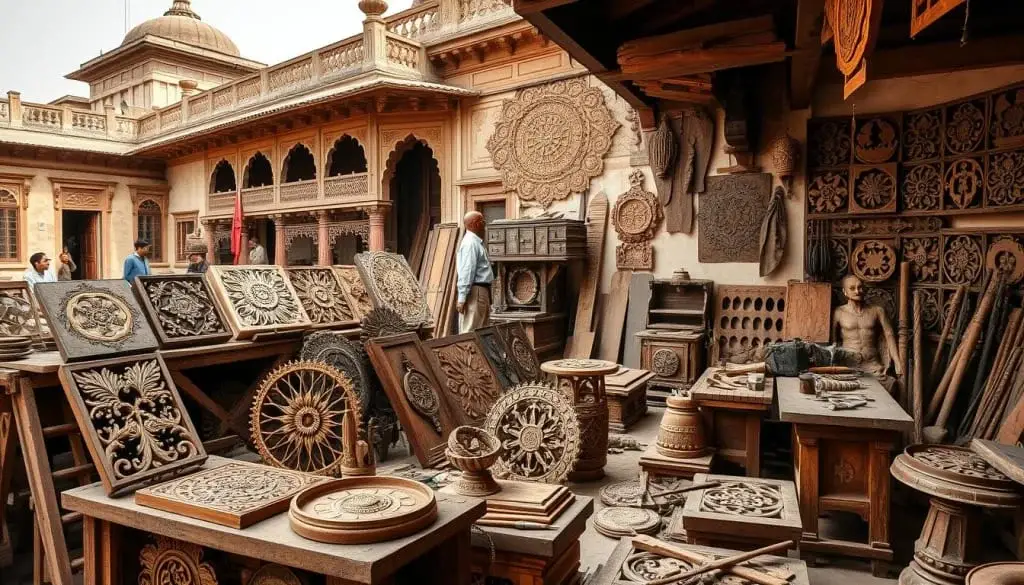
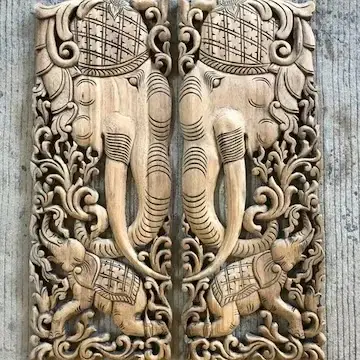
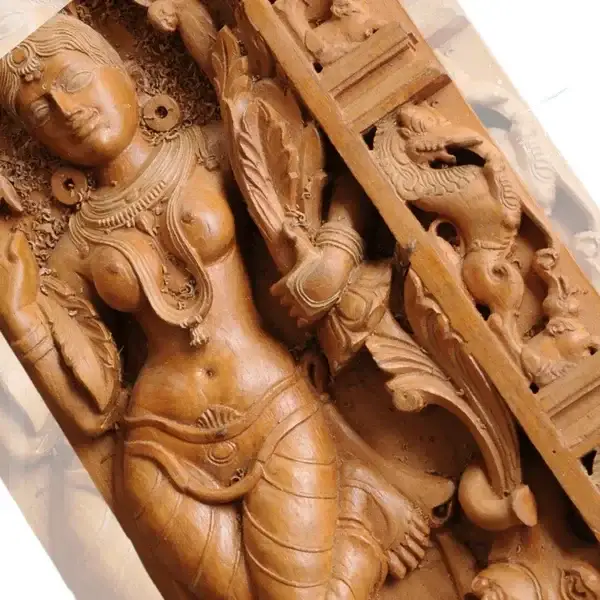
Carving, turning and inlay — three skills, three places.
Saharanpur carves and inlays. Channapatna turns and lacquers on a lathe, with a GI tag and a toy tradition behind it. Kashmir carves walnut, the slowest and most detailed of the three. Matching the form to the right cluster is most of the sourcing work.
Artisan clusters
· Saharanpur, Uttar Pradesh — carving & inlay
· Channapatna, Karnataka — lacquered turnery (GI)
· Srinagar, Jammu & Kashmir — walnut carving
· Jodhpur, Rajasthan — furniture accents
Materials & finishes
· Sheesham (Indian rosewood)
· Mango wood — plantation sourced
· Kashmiri walnut
· Hale & rubber wood for turnery
· Natural oil, wax, lacquer, food-safe and toy-safe finishes
Sourcing flow
01
Brief
02
Cluster match
03
Sample & approve
04
Production & inspection
05
Pack & ship
Wood formats and typical sizes.
Serving boards & bowls
Mango and sheesham, food-safe oil finish, 15–45 cm.
Boxes & organisers
Carved, inlaid or plain; jewellery, tea and desk formats.
Carved wall panels
Jali and relief panels, modular or single-piece up to 120 cm.
Lathe-turned toys
Channapatna lacquer, natural-dye colours, toy-safety testable.
Kitchen & table accents
Coasters, spice boxes, spoons and trivets.
Furniture accents
Carved legs, brackets, headboard panels and door fronts.
Customisation & sampling
Your design, their hands.
We sample from a drawing, a 3D file or a physical piece. Wood grain and moisture are the variables — we agree species, moisture range, joinery and finish sheen on the approved sample, then hold it as the bulk reference.
Packing & inspection
It has to survive the journey.
Wood moves with humidity and chips at the edges. Packing specifies moisture range at dispatch, corner and edge protection, individual wrap for carved faces, and cartons sized to keep pieces from shifting in transit.